
Summative Evaluation of the “We Cannot Wait” Project (2021–2025) for the Ethiopian Women Lawyers Association (EWLA).
Partner: Ethiopian Women Lawyers Association (EWLA), in partnership with Strategic Initiative for Women in the Horn of Africa (SIHA) Network, Musawah, FIDA-Uganda, and NAGAAD NetworkLocation: Afar, So...
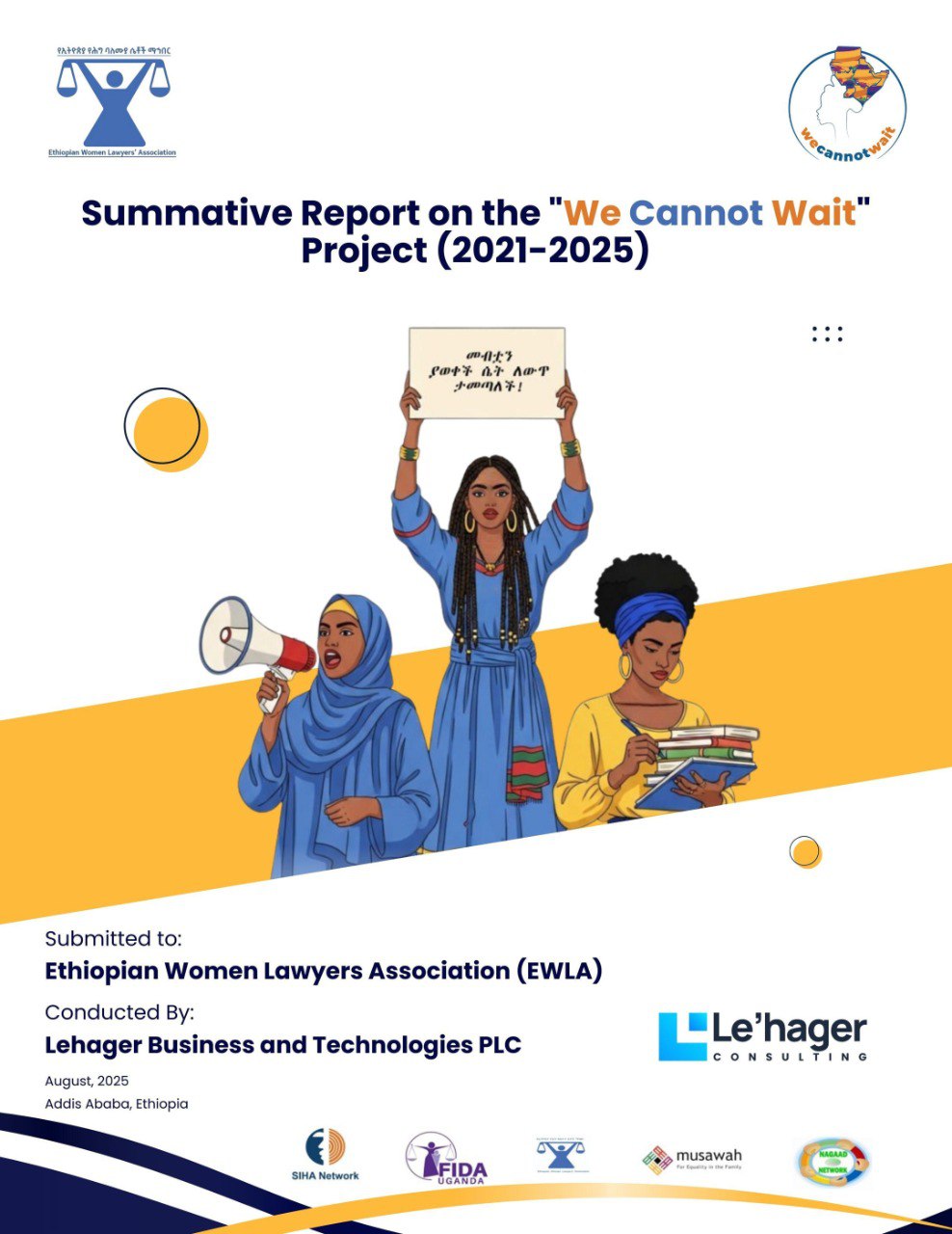
Partner: Ethiopian Women Lawyers Association (EWLA), in partnership with Strategic Initiative for Women in the Horn of Africa (SIHA) Network, Musawah, FIDA-Uganda, and NAGAAD Network
Location: Afar, Somali, Amhara (Bahir Dar), Oromia (Adama), Benishangul-Gumuz (Assosa), Gambella, Addis Ababa, and Dire Dawa, Ethiopia
Background
The Ethiopian Women Lawyers Association (EWLA) is a non-profit organization dedicated to promoting and protecting women's and girls' rights through free legal aid, research, advocacy, and public education.
Under the five-year regional initiative "We Cannot Wait: Towards an Inclusive and Diverse Women's Movement in the Greater Horn of Africa" (WCW)—implemented with SIHA Network and consortium partners—EWLA worked across multiple regions in Ethiopia to strengthen an inclusive women's movement capable of driving systemic change.
The initiative focused on two core objectives: strengthening women's leadership and participation in political decision-making, and enhancing women's economic empowerment while improving the overall economic climate for women.
Challenge
The WCW project operated in a complex socio-economic, legal, and post-conflict landscape marked by deeply entrenched patriarchal norms, regional conflicts, and a significant "implementation gap" between progressive national laws and practical enforcement. Women face limited legal literacy, disproportionate domestic burdens, security concerns, and systemic barriers in accessing justice and political platforms. Evaluating this multi-regional project required systematically synthesizing complex quantitative PITT data alongside qualitative field evidence, success stories, and beneficiary experiences to produce a rigorous, field-credible report that captures transformative changes without losing the authentic voices of women activists and survivors.
Approach
Le'Hager Business and Technologies PLC conducted a comprehensive end-to-end summative evaluation using a ToC-centered, mixed-methods design:
Editorial & Field Documentation — Capturing individual success stories and transformative journeys (e.g., Asayech Simeneh, a Benishangul-Gumuz Supreme Court judge who overcame personal hesitation to champion gender-sensitive court reforms and train peers; Almaz Bekafa, an Amhara Supreme Court judge who launched digital platforms and pushed for judicial quotas; Abebech Belete, who successfully reclaimed inherited land rights and became a community leader; Seble Demissie, a social worker turned community leader who established 25 Self-Help Groups and a model village; and Tigist Ejigu, a coalition member who sheltered and supported a young GBV survivor to continue her education) alongside systemic case studies (such as legal advocacy in Oromia securing landmark GBV convictions and blocking regressive educational directives).
Mixed-Methods Evaluation Methodology — Combining quantitative survey data from 98 beneficiaries and stakeholders across regions with qualitative insights from 32 Key Informant Interviews (KIIs) and 18 In-Depth Interviews (IDIs) targeting coalition leaders, judges, government officials, and community activists.
Comprehensive Document & Data Review — Triangulating findings through systematic analysis of project proposals, annual reports, mid-term evaluations, research validation workshops, and Performance Indicator Tracking Tables (PITT).
OECD-DAC Criteria Alignment — Rigorously evaluating project performance across relevance, coherence, effectiveness, efficiency, impact, sustainability, and equity dimensions.
Ethical & Safeguarding Standards — Ensuring full informed consent, data privacy, participant safety, and protection for vulnerable groups and GBV survivors throughout the field evaluation process.
Impact
The evaluation confirms that the WCW project drove transformative, measurable impact across Ethiopia:
Substantial Leadership Growth — Increased the proportion of Women's Rights Advocates in leadership positions within WROs from a baseline of 32% (national) / 27.5% (regional) to 77.8% at endline.
Concrete Legal & Policy Influence — Influenced 3 key electoral/political laws, 2 government policies (including the draft Anti-GBV Bill), 5 strategic litigation cases on economic rights, and successfully blocked a regressive Ministry of Education directive threatening teenage mothers' access to education.
Inclusive Movement & Coalition Building — Established 100% rated effective coalitions across target regions, leading to structural achievements such as court fee waivers for marginalized women in Benishangul-Gumuz and expanded peer mentorship networks in Dire Dawa.
Social Norm Transformation & Rights Realization — Lowered public tolerance for GBV, strengthened customary court responsiveness, and provided over 10,622 women with access to legal aid for economic and social rights.
More NGO Support Projects
Explore more of our work in NGO Support category.
 Assessment & Research
Baseline assessment for EYA
We is proud to have conducted a baseline assessment for EYA, highlighting critical gaps in safety, GBV awareness, and access to services for displaced women and girls in Debre Birhan.Through a mixed-m...
 Assessment & Research
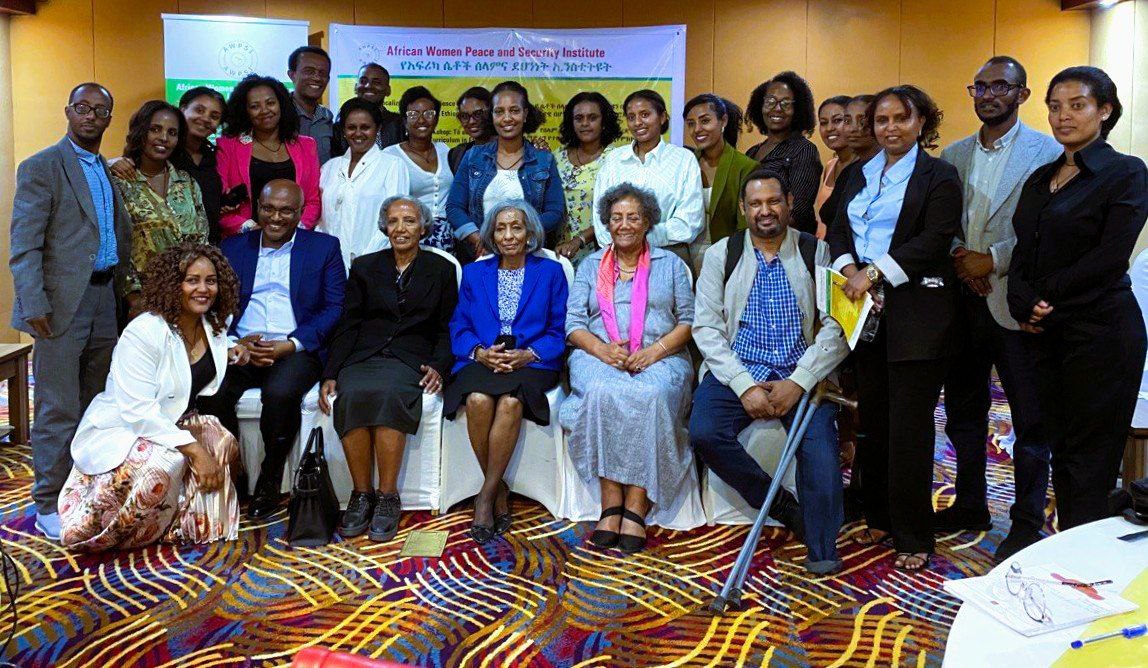
Exciting Collaboration for Peace Education in Ethiopia!
Lehager Consulting is proud to partner with the African Women Peace and Security Institute (AWPSI) under a project led by ACCORD, supported by the Irish Government's International Development Pro...